TECHNO-FEUDALISM
We’re living in a period where digital transformation is accelerating so quickly that it forces us to rethink not only classical economic models but also the social frameworks that used to feel solid. One of the concepts that keeps surfacing in these discussions is techno-feudalism. The term sounds dramatic at first — almost like asking, “Are we returning to the Middle Ages?” But the reality behind it is modern and deeply relevant.
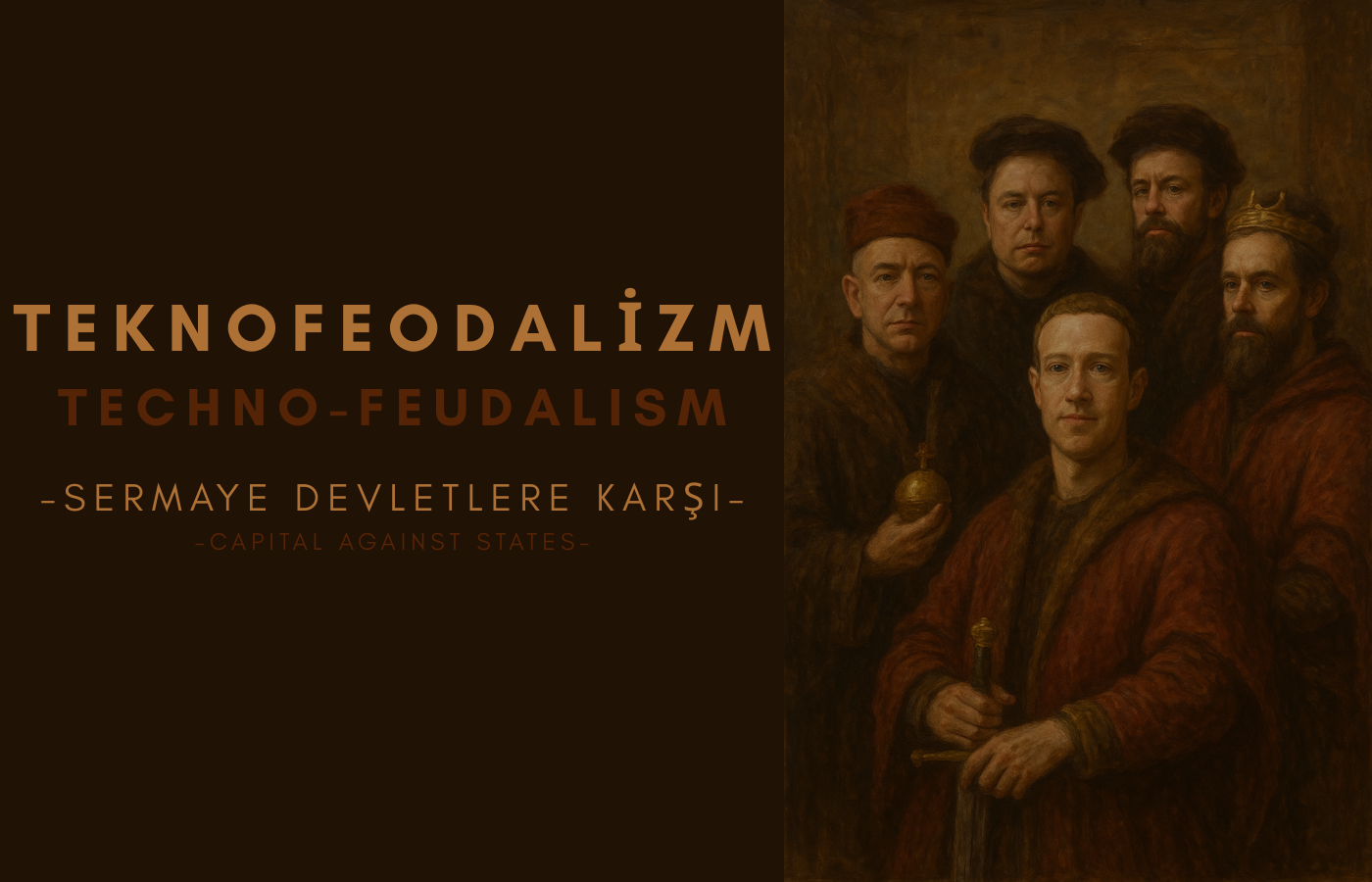
In the old feudal order, power was concentrated in the hands of a few landowning lords. Today, that concentration appears in a new form: power sits with a handful of companies that control data, digital infrastructure, and the platforms through which much of daily life now flows. Land has been replaced by data; feudal lords by technology giants. And the more I observe this transformation, the more I feel that techno-feudalism is not an exaggeration but a surprisingly fitting metaphor.
What drives this new concentration of power? I see four core dynamics: privileged access to data, superiority in digital infrastructure, platform dependency, and strong network effects. Together, they place large tech firms in positions of structural dominance. Over the past two years alone, the combined market value of a few global technology companies has exceeded the GDP of multiple nation-states. That level of economic power naturally spills into political and societal affairs.
Even the public tension between Donald Trump and Elon Musk — two figures who once seemed aligned — has laid bare how enormous this power has become. Their feud made many people wonder: Has the balance shifted too far?
What concerns me most in this conversation is the gradual shift of individuals into a state of digital dependency. Platforms have become so embedded in our daily routines that opting out often feels impossible. Who owns our data, how it is processed, and which algorithms shape our experiences are becoming critical questions. When so much influence is concentrated in a few hands, it’s worth asking whether people’s ability to navigate the digital world freely is being diminished.
Against this backdrop, the approaches of three major global players — the United States, China, and the European Union — reveal a fascinating contrast.
The United States sits at the very center of this debate, largely because nearly all of the world’s major tech companies were born there. The U.S. model is grounded in entrepreneurship and innovation, and this has undeniably generated enormous dynamism. Yet there remains a strong belief that markets will regulate themselves. Yes, the Federal Trade Commission has initiated several antitrust cases in recent years, but I don’t see them reshaping the sector in a fundamental way. In practice, the dominant view still seems to be that concentrated corporate power is a natural outcome of market forces — a view that, intentionally or not, allows techno-feudal structures to deepen.
China, by contrast, adopts a model almost opposite to the American one. Digital infrastructure, data governance, and platform behavior are heavily directed by the state. Data is framed as a national security asset, and platform companies operate within a tightly controlled ecosystem. This creates a state-centric version of techno-feudalism rather than a corporate one. Power is still centralized, but its anchor is the government instead of private firms. The advantage is strategic autonomy and strong national digital sovereignty. The trade-off is diminished transparency and limited personal freedoms.
The European Union offers yet another variation — and in my view, the most systematic response. Regulations such as the Digital Markets Act and the Digital Services Act introduce concrete obligations for major platforms: transparency requirements, data-sharing conditions, and rules to ensure fair access. The goal isn’t to slow companies down but to protect competition, user rights, and digital autonomy. Europe also puts strong emphasis on digital sovereignty, not only through regulation but by investing in its own technological ecosystem. This makes the EU something of a balancing force in the techno-feudalism debate.
Taken together, these three approaches illustrate that techno-feudalism is not tied to any single geography. It reflects a global transformation in how digital power is structured. The U.S. excels at innovation but allows corporate dominance to grow unchecked. China embeds digital power within the state. Europe tries to engineer a balance through governance and regulatory oversight. None of these models is perfect, but each represents a meaningful attempt to navigate the risks and opportunities of the digital era.
How should we interpret this reality?
So should we be “fighting” techno-feudalism? To me, this isn’t really a battlefield issue — it’s a governance issue. Who controls digital power? Who manages data? How are algorithms supervised? What rights do digital citizens have? Every country will answer these questions differently. But I personally believe that the healthiest future lies in a hybrid approach: one that protects innovation while also safeguarding societal balance.
Technology offers extraordinary possibilities. Yet when those possibilities accumulate in a few centers of power, the historical patterns of imbalance return in modern form. That’s why I don’t see techno-feudalism as a dramatic exaggeration but as a very real structural threat. Any system that grows unchecked can become intoxicated with its own power and challenge every form of authority. Perhaps we’re experiencing this more intensely than we realize — and haven’t fully awakened to it yet. By the time everything becomes transparent, it may already be too late.
For that reason, we need a new kind of separation of powers — not between legislative, executive, and judicial branches, but between corporate power, state power, and user rights. The better we balance these forces, the more democratic and inclusive the future of the global digital economy will be.