
Procrastination
In this article, I will address the topic of "Procrastination," which we have been encountering frequently in recent days. First, let me state this clearly right off the bat: There is no such illness in medical literature. But no, it is not an attempt to package laziness into a cool term like "Procrastination" either. It is a condition whose frequency of occurrence is increasing, unique to the spirit of the time.
Why this topic?As you know, the skill of time management comes to the forefront in order to use your time efficiently, enjoy life, and make plans for the future. Especially in today's world. Here, the inability to manage time effectively or constantly delaying tasks that need to be done is often the most significant obstacle to success. This condition, defined as procrastination, significantly disrupts daily routines.
What is Procrastination?"Procrastination," or delaying tasks without realistic reasons, occurs when a person continuously postpones the work they need to do and turns this habit into a trait. Hiding behind various excuses to avoid doing the work or consciously engaging in other things is the most prominent characteristic of people with procrastination issues.
People who procrastinate tend to continuously delay everything they have time for. For example, if your project deadline is approaching but you shift toward less important tasks or continue to engage with topics you enjoy, congratulations! Most likely, you are a procrastinator! This state of procrastination usually continues until the very last minute. Those famous Mondays that are supposed to mark the beginning of a new period in our lives, or "after the holiday" and "after the vacation," are also examples that can be given for this behavioral pattern.
What Are the Symptoms of Procrastination?We have mentioned some above, but taking a more detailed look, symptoms of procrastination can vary from person to person. This situation can make managing work, education, and social life difficult, leading to various other problems. Experts list the common symptoms observed in people with procrastination issues as follows:
A continuous desire to postpone, Inability to make decisions, Accumulating tasks, Inventing excuses, Feeling stressed and anxious, Lack of motivation, Lack of detailed work.
Who Gets Procrastination?Procrastination can be seen in anyone of any age. It is frequently observed in individuals who cannot tolerate pressure, are lazy, and lack time management skills. Additionally, those with a perfectionism obsession are inclined toward this behavior. Apart from this, this situation is also seen due to a lack of motivation in people going through an emotionally difficult period. Furthermore, finding the job unimportant or believing it is not suitable for oneself is a common trait among procrastinators.
What Are the Causes of Procrastination?Of course, this condition—that is, the state of apathy or escape and repeating it constantly—is a result. Experts list the reasons that bring us to this point as follows:
Fear of failure, Distrust in knowledge, Perception of perfectionism, Disruptions in planning, Inefficient time management, Inability to find sufficient motivation, Concern about not finishing, Trying to do multiple tasks simultaneously, Finding the task unimportant.
Can Procrastination Be Treated?Even though we stated at the beginning that this is not an illness, we can treat it by approaching it as if it were one. After observing ourselves, acknowledging this behavior (if present) should be the first step. Next, taking note of the factors driving us toward this behavior emerges as another critical step. Afterward, our goal will naturally be to tackle these factors individually. Finding the root cause here is very important, and the common picture encountered is usually a lack of time management at the core of the task and a lack of proper motivation. The foundation of effective time management is for the individual to plan the tasks to be done and act within the framework of rules they set themselves.
Of course, you can manage this process yourself, or if you prefer, you can also request professional support. It is very important for an individual to motivate themselves in this regard. As this condition becomes chronic, it can lead to the formation of various problems. Therefore, it should not be neglected.
How Do We Get Rid of Procrastination?Breaking the procrastination cycle does not happen overnight. It requires a combination of self-awareness, appropriate strategies, and a bit of self-discipline. Below, I have included some actionable tips that will help you stop procrastinating and increase your focus and productivity:
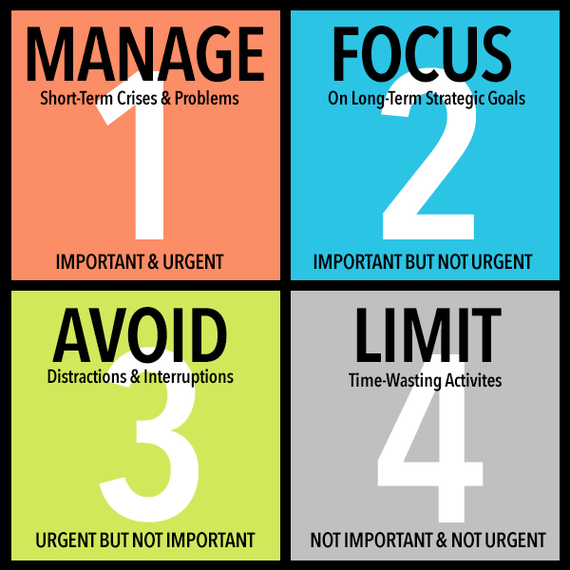 Use Time Management Techniques
Create a daily routine suitable for you based on time management techniques like the Eisenhower matrix. You can group your pending workload into items to do immediately, items to plan and do later, items to delegate, and items to reject. For the last part, of course, we also need to learn to say "no" when necessary. Apart from this, if you generally struggle to concentrate on work, time-box your work by setting an alarm for a short period and taking a break afterward. These methods can help you structure your time better, enter a flow state, and make tasks appear less daunting.
Try the 2-Minute Rule
The 2-minute rule is a simple strategy to overcome procrastination. If a task takes less than two minutes to complete, it suggests doing it immediately instead of postponing it. Need to reply to an email? Do it right away. Need to call someone? Call immediately. This rule is useful for small tasks that can be completed quickly but are often postponed, preventing your list from piling up.
Work on Your Self-Discipline
Self-discipline is not about bullying yourself into doing things on your to-do list that you don't want to do. Instead, try practicing self-discipline by setting conscious decisions (goals you truly want to achieve) and consistently working on them. Over time, this practice can help train your mind and reduce your tendency to procrastinate.
Minimize Distractions
Identify your distractions and find ways to eliminate or reduce them. This could mean turning off notifications on your phone or creating a dedicated workspace. You can also use focus music to keep distracting sounds out.
Break Complex Tasks into Small, Manageable Steps
Break down complex tasks into smaller, manageable subtasks. This is an important part of setting achievable personal goals. To reduce the overwhelm usually associated with large to-dos, tackle a smaller task each time.
Reward Yourself for Small Wins
Celebrate your achievements, no matter how small they may be. Rewards can motivate you to keep going and reduce your tendency to procrastinate.
Apply Mindfulness and Relaxation Techniques
Incorporate mindfulness practices like mindful breathing and meditation to manage stress and anxiety, which can often fuel procrastination.
Get a Buddy to Evaluate Your Situation With
Need someone to hold you accountable? Do not hesitate to ask for help from friends, family, or professionals to evaluate or support you. Receiving support and encouragement from others can help you stop procrastinating and give you ideas or coping tools.
Reflect and Adjust
Reflect on which strategies work for you and adjust when necessary. Overcoming procrastination is a journey, and it is normal to keep adjusting your approach as you progress.