
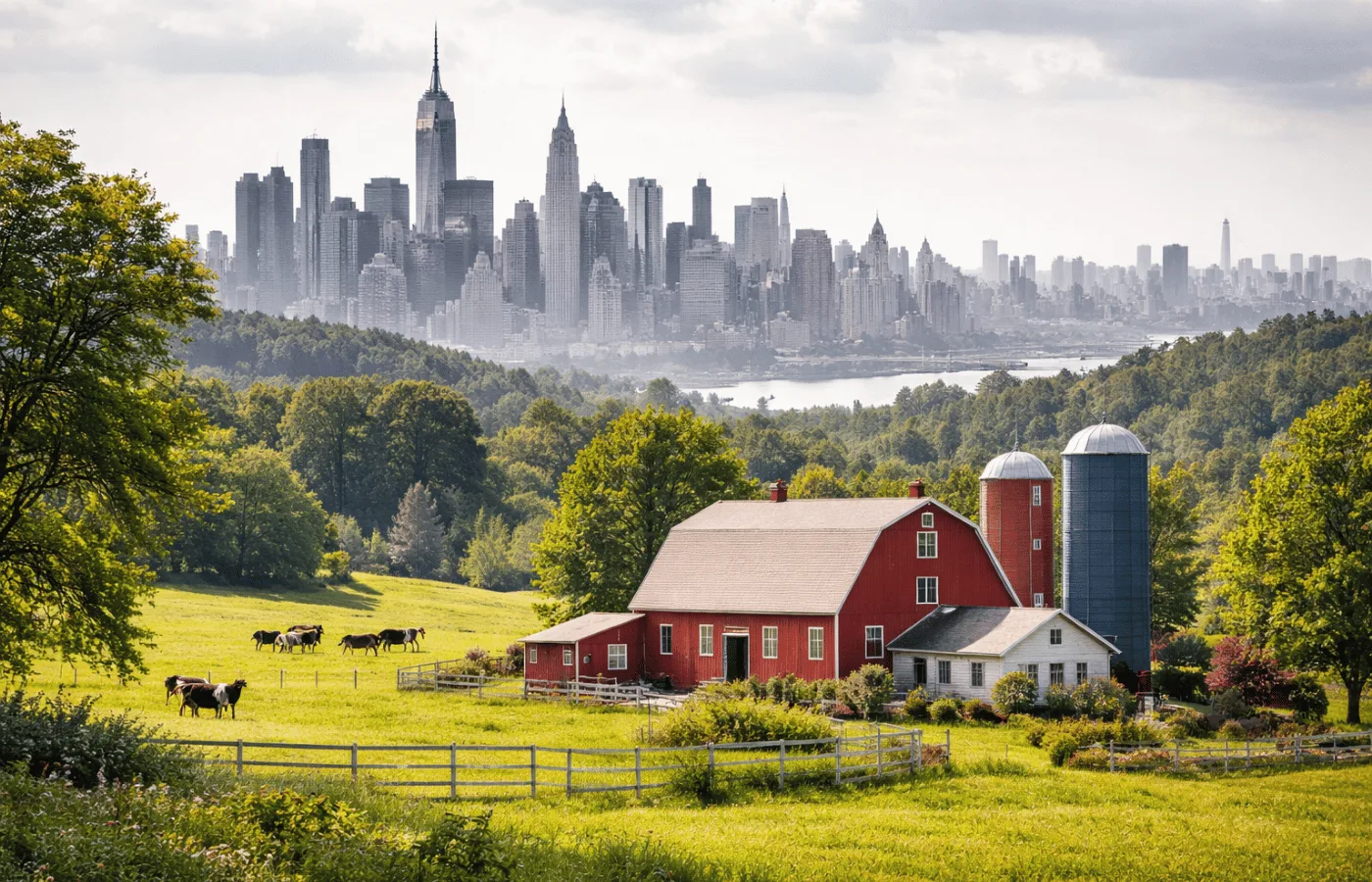
Urbanization and Return to Rural Areas
Urbanization is considered one of the most decisive social transformations of the last two centuries. Accelerated by industrialization, this process drew millions of people from rural areas to cities due to educational opportunities, job prospects, healthcare services, and social amenities. In Turkey, as across the world, this wave of migration turned major cities into economic hubs while simultaneously pushing them to the brink of a serious management crisis. Today, the return to rural areas is no longer just a nostalgic dream; it has become a globally debated alternative living model.
For many years, the city was synonymous with "opportunity." However, population density, infrastructure deficiencies, the housing crisis, traffic, air pollution, and rising living costs have begun to reverse this perception. A trend that accelerated particularly with the pandemic stands out: people are not trying to give up the opportunities offered by big cities, but rather trying not to be trapped by them.
The Unmanageability of Big Cities
According to United Nations data, approximately 56% of the world's population lives in cities today, and this rate is expected to reach 68% by 2050. However, this growth does not imply sustainable urbanization. On the contrary, megacities are increasingly turning into complex and fragile systems. In cities like Istanbul, London, New York, or Shanghai, housing costs have increased by 30–50% in real terms over the last five years. This increase creates not only economic but also social pressure.
The fundamental problem here is that the pace of urbanization has exceeded the capacity of cities to renew themselves. Cities are growing, but infrastructure, environmental resilience, and social cohesion cannot develop at the same pace.
Escape to the Countryside
In the post-pandemic period, the trend of escaping to the countryside has become particularly pronounced among highly educated groups with digital skills. People seek three main things in rural areas: lower living costs, contact with nature, and control over their time. Remote work and internet infrastructure expansion have made this dream seem economically possible for the first time.
However, there are serious challenges at this point that are often overlooked. Life in the countryside does not come solely with the romanticism of escaping the city; it comes with infrastructure deficiencies, limited access to healthcare, educational constraints, social isolation, and seasonal risks. A large portion of individuals who turn to agriculture or livestock farming are forced to revise their plans within the first 2–3 years. Because nature demands discipline just as much as it offers freedom.
Technology and Rural Life
The critical turning point here is technology. Smart agriculture applications, remote monitoring systems, small-scale renewable energy solutions, and modular building technologies make rural living far more manageable compared to the past. The funds allocated by the European Union for rural digitalization in the 2023–2024 period demonstrate that this transformation is being taken seriously at the state level as well.
In the United States, under the banner of "rural revitalization," the goal is particularly to attract tech entrepreneurs to small towns. China, on the other hand, is trying to maintain planned urbanization to prevent uncontrolled rural dissolution. In Europe, countries like Germany and Scandinavian nations draw attention with hybrid models that encourage rural living.
Sustainability Perspective
Considering the world's limited resources, it is now clear that the current pace of urbanization is not sustainable. Cities are less efficient than rural areas in terms of per capita energy and water consumption. In contrast, well-planned rural settlements offer significant advantages in terms of local production, short supply chains, and a low carbon footprint.
At this point, my personal view is clear: organic living is more suited to human nature. Thanks to advancing technology, building a house, small-scale farming, or livestock breeding are becoming much more accessible than in the past. In contrast, big cities are becoming more
Which One Will Be More Valuable in the Future?
When we reach 2050, the issue will transform less into a question of "city or countryside" and more into a question of which living model is more resilient. Big cities will not disappear completely; however, they risk turning into mandatory living spaces rather than centers of attraction. Rural living, on the other hand, when supported by the right infrastructure and technology, could become a far more valuable alternative in terms of both personal fulfillment and planetary sustainability.
The real shift will not be where people live, but how they live. And in this equation, it will not be surprising to see models that are more compatible with nature, productive, and scalable come to the fore in the long run.