Techno-Feudalism – Corporations Against States
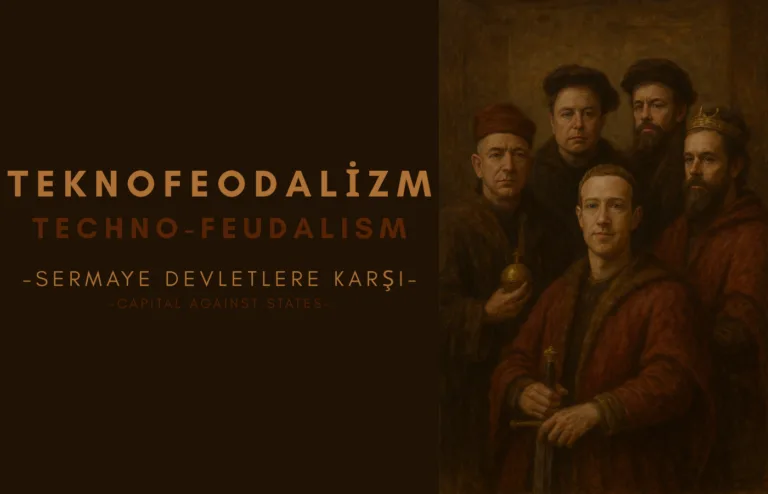
We are living in an era where digital transformation is accelerating, and this pace forces us to rethink both classic economic models and social structures. One of the concepts that has frequently emerged recently is techno-feudalism. This term sounds a bit ambitious at first; it makes one think, "Has the Middle Ages returned?" but in fact, the issue is much more contemporary. In the feudal system, power was concentrated in the hands of a few lords; today, power belongs to a few big companies that control data and digital infrastructures. Data instead of land, tech giants instead of feudal lords… Ultimately, I think this concept is quite a fitting metaphor to explain the transformation we are experiencing.
Behind the concentration of power in the digital economy, I see a few fundamental dynamics: access to data, infrastructure superiority, platform dependency, and network effects. These factors lead to big companies in particular gaining a dominant position in the market. For instance, over the past two years, we have been watching the total market value of a few of the world's largest tech companies surpass the GDP of many countries. This economic power inevitably begins to spill over into political and social spheres as well. So much so that the tense exchanges between Trump and Elon Musk, who set off as buddies, exposed the reality of the situation quite starkly, bringing to mind the question, "Has things gone too far?"
What makes me think the most in techno-feudalism debates is that individuals are gradually becoming "dependent users" within the digital ecosystem. Digital platforms have become so embedded in our lives that we sometimes feel as though there is no alternative. The issues of who holds the data, how it is processed, and through which algorithms decisions are made are also becoming increasingly critical. Combining all of these, I believe it is necessary to question whether individuals' power of self-determination in the digital world is weakening.
Within this framework, when I look at how three major regions in the world — the US, China, and the EU — position themselves against techno-feudalism, I see quite an interesting picture.
The United States is right at the center of this debate. Because almost all of the tech giants emerged here, and today their economic, cultural, and political impacts are felt on a global scale. The US model is built on entrepreneurship and innovation. It is clear that this approach creates a strong dynamism; however, it is possible to say that the belief in the market balancing itself is still dominant. In recent years, we see that the Federal Trade Commission has filed some antitrust lawsuits, but I do not think these lawsuits have reached a level that would revolutionize the sector. Therefore, when evaluating the US model, I get the impression that an approach treating the concentration of tech companies' power as a natural market outcome is dominant. This creates an atmosphere that feeds the seeds of techno-feudalism.
In China, on the other hand, there is an exact opposite picture. Digital infrastructure, data management, and the platform economy are largely under state control. China's model is more centralized and more control-oriented. The state establishes a tight relationship of cooperation and oversight with tech companies. Data is seen as an extension of national security, and as a result, the behavior of platforms is shaped by the state. This model stands closer to a state-centered version of techno-feudalism rather than a corporate-centered one. Power is centralized once again, but this time the control point is the state, not the companies. The advantage of this approach is that it displays a strong stance on national sovereignty and strategic autonomy. However, a more controversial picture emerges regarding personal rights and transparency.
The European Union, on the other hand, follows a different path between these two extremes and, in my view, is the bloc showing the most systematic reflex. The EU's regulations such as the Digital Markets Act and the Digital Services Act contain concrete steps against monopolization and platform power. Obligations regarding data sharing, transparency, and equal access are imposed on large platforms. When analyzing the EU's approach, I feel this: The goal here is not to slow companies down, but to protect competition and user rights. Therefore, the European model offers a kind of balance point in techno-feudalism debates. The concept of digital sovereignty is also a theme frequently emphasized by Europe in recent years. In other words, there is not just regulation, but also an effort to build its own digital ecosystem.
When I consider these three different approaches together, a picture takes shape in my mind: Techno-feudalism is not the problem of a single geography; it is related to the transformation of a global power architecture. The US produces innovation, but corporate power becomes overly concentrated. China keeps digital power under state control. The EU, on the other hand, tries to strike a balance through regulation. In my opinion, none of these is fully an "ideal model"; however, each represents concrete responses given to the different risks and opportunities of the digital age.
How should we evaluate the subject in general?
Therefore, when I consider whether techno-feudalism should be fought against, I think this is less a matter of "struggle" and more a matter of "governance." Who will control power? Who will manage data? How will algorithms be audited? How will digital citizenship rights be protected? The answers to these questions will vary depending on the preferences of each country or region. However, my personal view is that in the digital age, a hybrid approach that both protects innovation and observes social balance is the healthiest path.
The possibilities offered by technology are tremendous. However, when these possibilities concentrate in certain centers, the power imbalances we historically know can confront us again in a modern form. For this reason, I view techno-feudalism not as an exaggerated concept, but as an extremely real threat. Any structure that grows aggressively without control can challenge any will it encounters in a state of power drunkenness. Perhaps we are currently experiencing this so intensely in ways we don't even realize, yet we haven't woken up to the situation! By the time a transparent picture emerges, it might be too late. Therefore, a separation of powers must be constructed here, and the better we can manage the triangle between corporate power, state power, and user rights, the more democratic and inclusive the future of the world and the economy will be.