
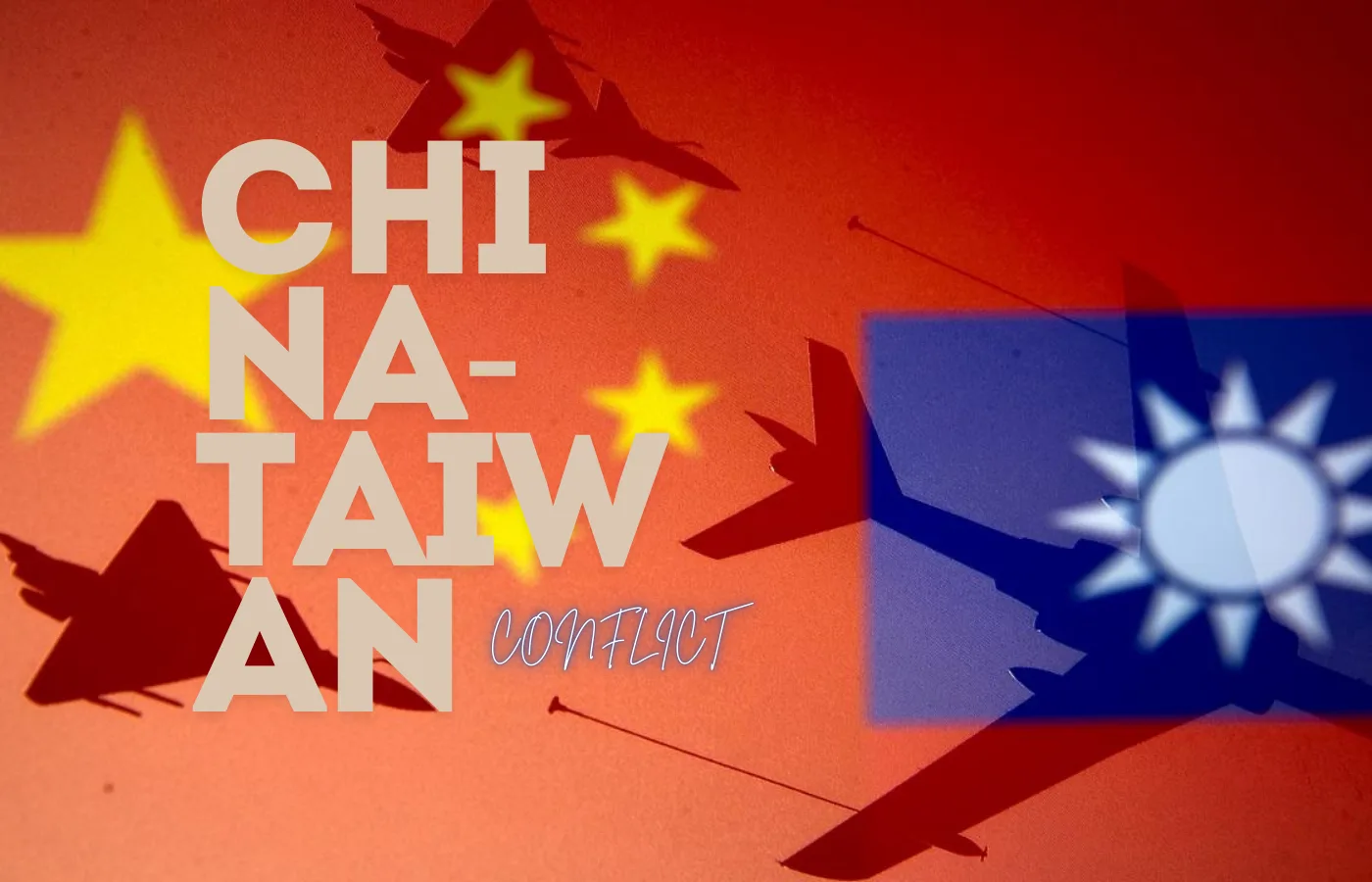
China-Taiwan Crisis: Historical Process and Recipe for Resolution
Undoubtedly, the global agenda will continue to follow the heating region and the China-Taiwan Crisis with interest for quite some time. However, considering the conflicting interests, it is only a matter of time before this crisis spins out of control or even escalates into a full-scale war.
If you like, let's briefly refresh our historical knowledge before evaluating the issue...
Tensions between China and Taiwan began in 1949 after the Chinese Civil War, when the Communist Party came to power in mainland China and the nationalist Kuomintang (KMT) fled to Taiwan. The People's Republic of China (PRC) regards Taiwan as an inseparable part of its territory. Taiwan, on the other hand, maintains a de facto independent administration and is governed by democracy. This historical rivalry forms the baseline of a crisis that persists today and flares up from time to time.
So, is there a possibility of this crisis turning into a war?
Of course, China's aggressive expansion in armaments and its status as currently possessing numerically the most powerful army in the world could be interpreted as a potential war situation yielding a very easy victory for China. Meanwhile, let us keep in mind the fact that China has been continuously conducting exercises for years on a potential Taiwan landing, even building replicas of critical targets in Taiwan to turn them into training grounds for executing surprise assault plans.
However...
It should be known that launching a military operation by China against Taiwan will not be as easy as assumed. Taiwan's geographical structure and the natural advantage derived from it, advanced defense systems, and the potential support of Western countries, primarily the US, make it difficult for China to reach this goal. Taiwan's strategic defense positions and the nature of the island make an amphibious assault highly complex. Furthermore, Taiwan's military capacity (regarded as the 23rd most powerful military globally) and high-technology defense systems must also be taken into account.
Of course, China may eventually capture the island, but at what cost? In other words, will the post-war situation place China in a better position? The cost-benefit analysis here is extremely critical for both China and the world.
A China-Taiwan war would severely impact not only the regional but also the global economy. Taiwan hosts giant companies like TSMC, which holds a major share of global semiconductor production. Therefore, a crisis occurring in Taiwan would trigger massive supply chain issues in the technology sector. In addition, China's potential to control trade routes in the Asia-Pacific region would lead to major disruptions in the trade of energy, raw materials, and manufactured goods.
Although it is difficult to provide an exact figure right now, we can perhaps better understand the estimated global impact of this war through the following comparisons.
This potential crisis, when compared with the economic costs of the COVID-19 pandemic and the Russia-Ukraine war, holds the potential to create a similar or even greater impact. While the pandemic caused trillions of dollars in damage to the global economy, the Russia-Ukraine war led to major fluctuations in energy prices and food security crises. A war breaking out between China and Taiwan could cause economic losses amounting to trillions of dollars due to supply chain disruptions in the tech sector and trade breakdowns in the Asia-Pacific region.
So, what should the roadmap be?
Some steps that should be taken to resolve this crisis and build a lasting peaceful environment could be:
Enhancing Diplomatic Efforts: The international community must step up its diplomatic efforts to reduce tensions between China and Taiwan. The United Nations and other international organizations should encourage dialogue and negotiation processes between the two sides.
Economic Cooperation and Integration: Economic cooperation between China and Taiwan can play an important role in easing tensions. Trade and investment relations between the two countries could reduce the likelihood of war by increasing mutual interdependence.
Avoiding Military Intervention: The international community should exert pressure on the parties to refrain from military intervention. In particular, the US and other Western nations must balance the military support they provide to Taiwan with diplomatic solutions.
Crisis Management and Emergency Plans: Crisis management and emergency response plans must be prepared in regions of critical importance for the global economy. Diversifying supply chains and establishing alternative sources can mitigate the impacts of a potential crisis.
In short, the tension between China and Taiwan is a serious crisis that threatens world peace and economic stability. The potential economic impacts of this crisis could be massive compared to the costs generated by the COVID-19 pandemic and the Russia-Ukraine war. Therefore, the international community needs to take steps toward preventing this crisis by intensifying diplomatic efforts, encouraging economic cooperation and integration, and avoiding military intervention. To protect world peace and human life, cooperation and dialogue are more vital than ever in resolving such crises.